
His Legacy
Final Years & Legacy
Colin Jones’s legacy lies in his evocative depictions of industrial South Wales, his sensitive portraits, and his exploration of form and abstraction in his later work. Deeply influenced by Josef Herman and Constant Permeke, his work moved from realism to a more expressive, often monumental style. His experience sketching underground at the Lady Diana drift mine in 1962 led to powerful works like Colliers and Miners at Rest, now held by the National Museum of Wales.
In his final years, Jones began to push his art into more ambitious territory. Works like Pithead Funeral (1966), likely a response to the Aberfan disaster, show a growing abstraction and emotional depth. Other late pieces, such as Crouching Boy, Collapsed Winding Gear, and Abandoned Barge at Lydney, reflect a synthesis of his skills as a draughtsman and his interest in painterly abstraction and spiritual resonance.
His French landscape sketches, notably from the Languedoc region, demonstrated a refined and lyrical approach to pen and ink. Drawings like Church and Cypress Trees and Montricoux capture stillness and subtle beauty, serving as a counterpoint to the intensity of his Welsh industrial scenes.
Although his career was brief, Colin Jones left a lasting impression on Welsh art. As Professor Tony Curtis remarked in 2005, had he lived, he would likely have made a major contribution to visual art in Wales. His late works suggest an artist reaching maturity, synthesizing abstraction and observation, and finding a unique voice in both local and European traditions.
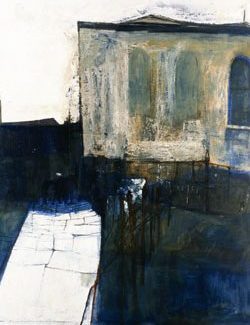
Funeral Merthyr
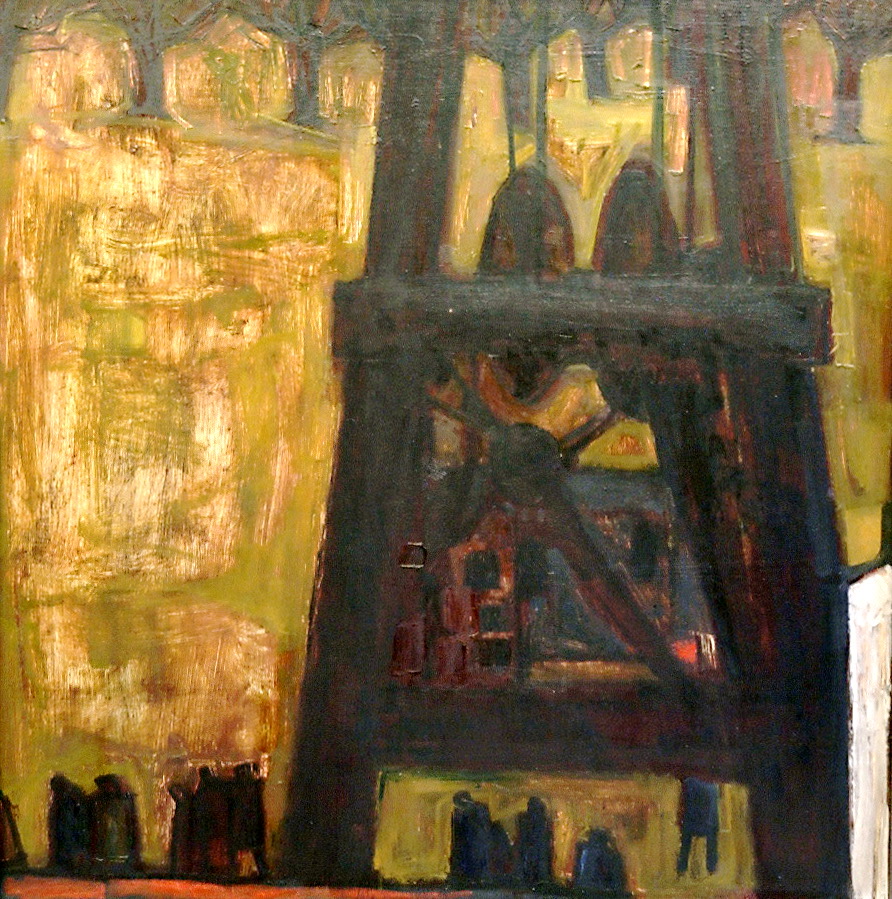
Pit Head Funeral
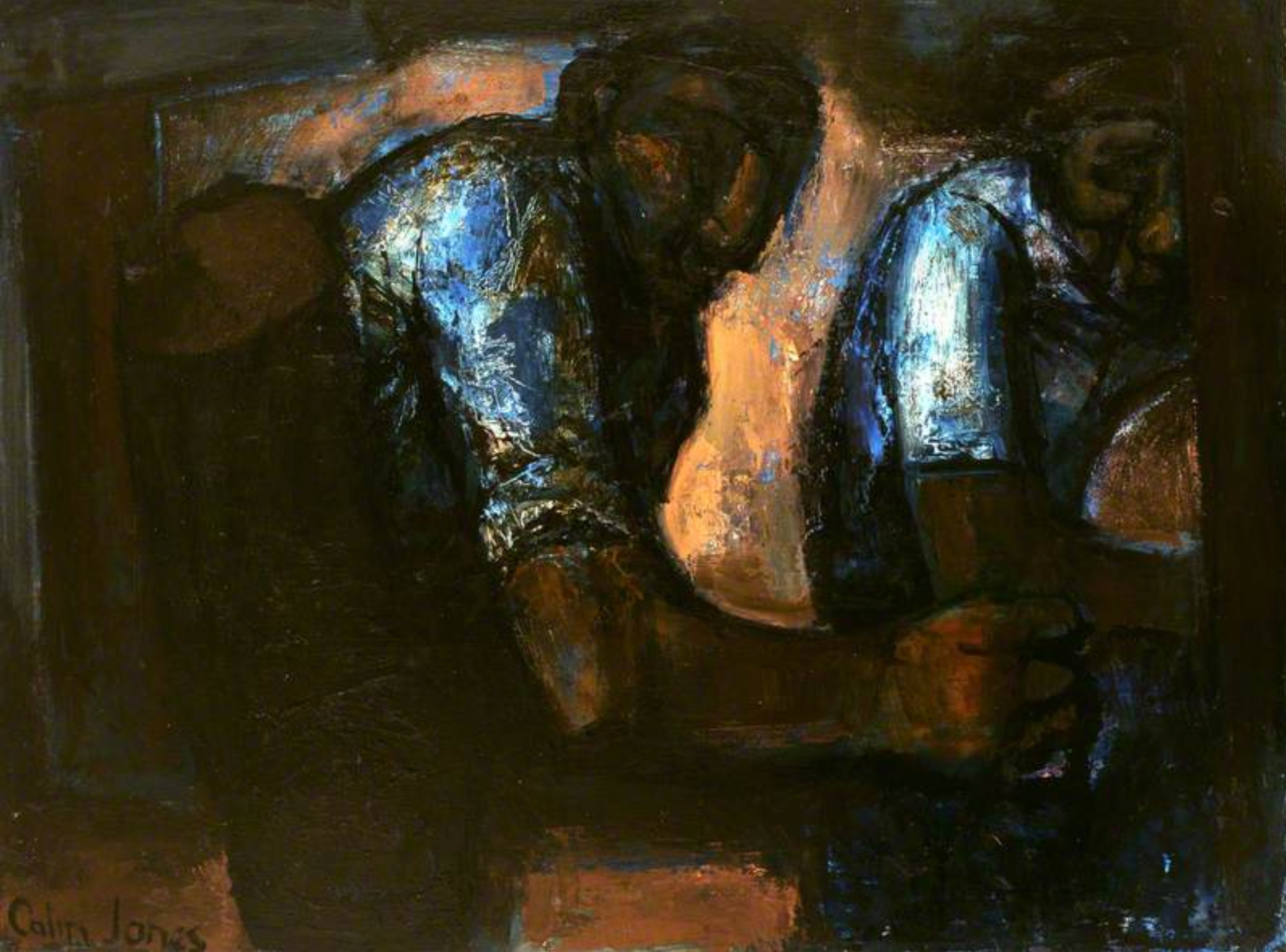
Colliers
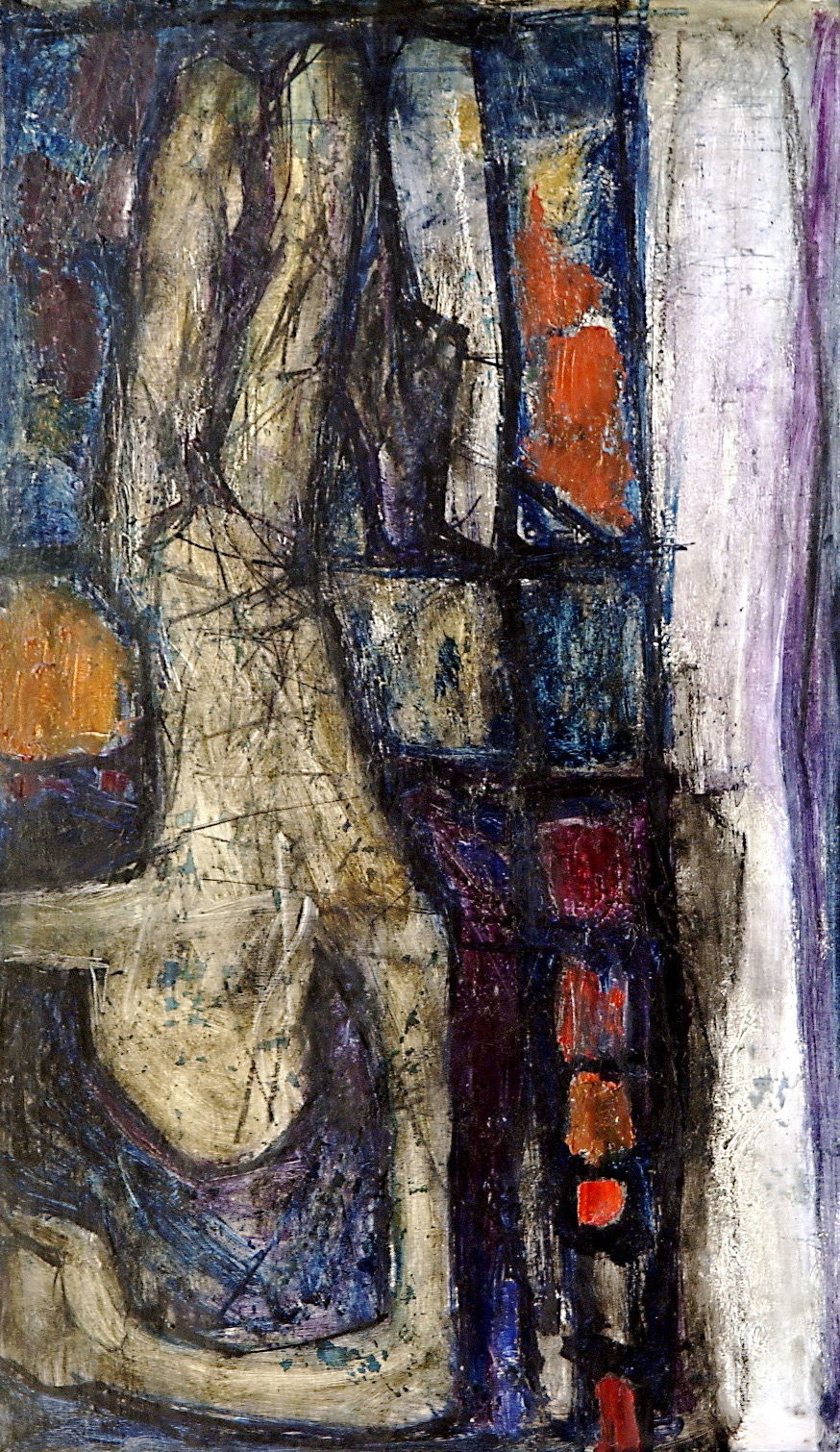
Fallen Figure